Neglect

Haverfordwest Shire Hall in its full glory, as it was
The Shire Hall has remained a bone of contention since it ceased to be used for judicial purposes in 2002. The court room was the raison d’être for the building to come about and became the replacement venue when the Old Guildhall that used to adjoin St Mary’s Church on the High Street side became too dilapidated and run down.
Various sites were put forward including the spot in St Mary’s Street where The Temperance Hall was later built and also the area to the side of Bethesda Chapel. It was finally decided that the building was going to be so important to the county that nowhere would suffice other than to have it on the main street, close to the town centre. The building took place in 1837, the architect, William Owen.
The court has seen many major trials its first being that of Rebecca Rioters on several occasions between 1840 and 1844.
The origins of modern local government go back to 1889 and for the first eleven years of its life the new County Council met ironically in The Temperance Hall which had come into being in 1888.
During the period 1900/01 some new internal woodwork was introduced to the Shire Hall courtroom to enable Council meetings to be held there. This practice of using it for meetings continued for much of the twentieth century.
When the courts ceased to be held in the courtroom (the law courts relocated to Hawthorn Rise) the current County Council set about selling or leasing the whole building. A local Trust was set up to examine the extremely viable proposition of using the building to the advantage of the town, with it always in mind that it has been a major part of this town’s history and the county’s history.
All over Wales are examples of former courthouses being retained in their glory and being used successfully. It was decided instead by the County Council to award a developer a 999 year lease on a peppercorn rent. As part of the schedule submitted to gain this lease, the developer stated that the historic significance of the court room would be maintained and access would be allowed.
Sadly neither of these promises have been adhered to and the County Council have not seen fit to implement them. A senior officer suggesting that they were aware of the stated intentions but that they had to give the leaseholder the opportunity to earn some money from the building.
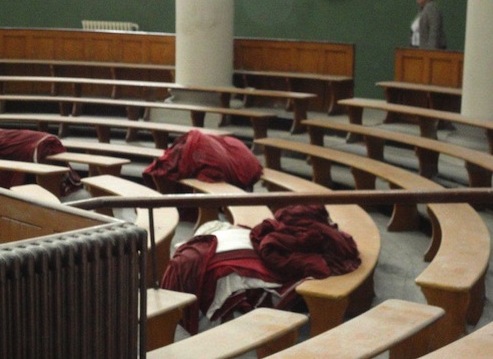
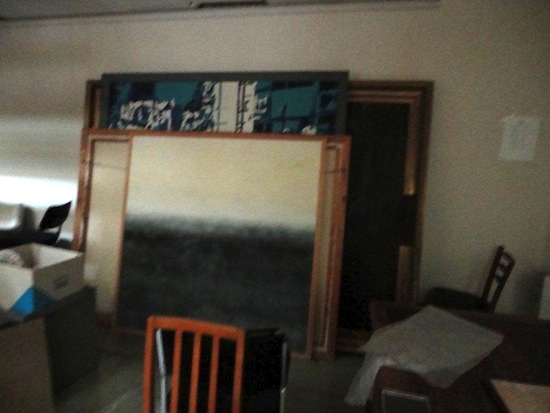
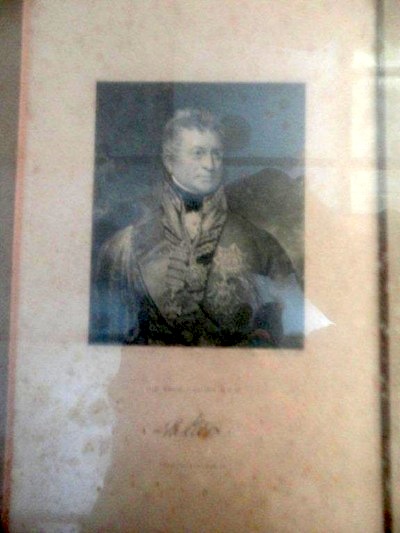
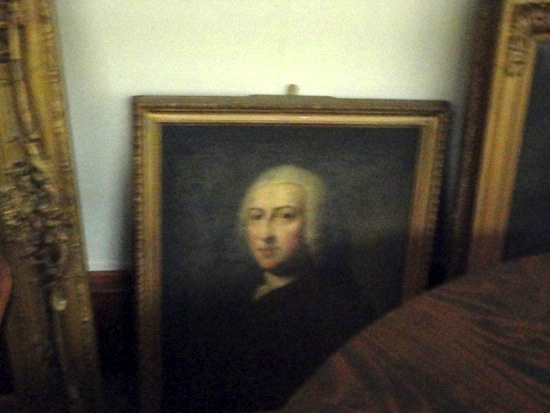
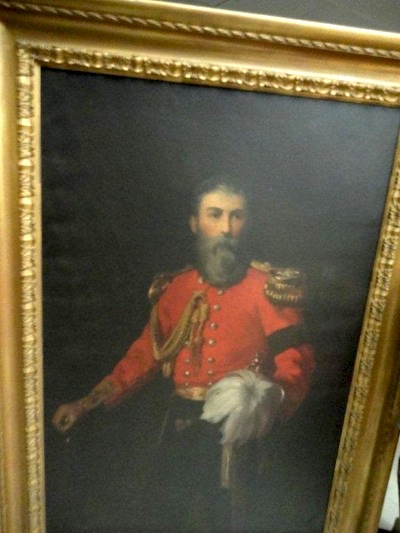
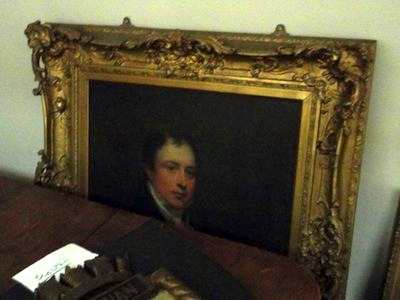
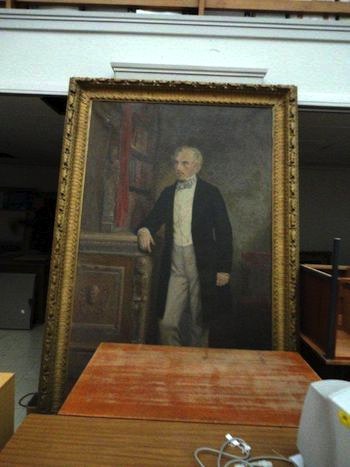
The building is listed Grade 11* but CADW, despite describing it as one of the finest in Wales have decided not to protect it and the County Council have now given permission for the court room to be dismantled with all of the structures that make it a court room being removed. What counts in addition as being listed is whatever was inside the building when the listing award was given. This of course means that the antique red velvet drapes and the portraiture on the walls forms part of that listing. They form more than that; they form part of the heritage of the county and the people within it.
The following series of images is of great concern to the Civic Society and we wish you to see them. They show the state of the red velvet antique drapes and the manner in which the portraiture is being stored. Many of these paintings are irreplaceable and of national importance.